New Species of Gliding Frogs with Unique Jelly Nests Discovered in Sulawesi
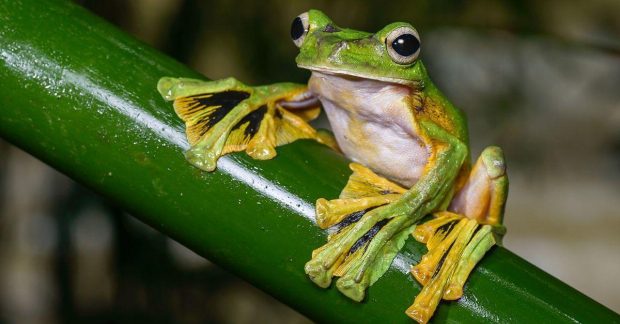
International researchers have identified a new species of bright green gliding frog, Rhacophorus kurniatiae, in Indonesia, noted for its unusual reproductive strategy.
 💡Tech
Photo: UNIAN
Key points
- Scientists discovered a new gliding frog species, Rhacophorus kurniatiae, on Sulawesi.
- The amphibians use a unique gelatinous matrix to protect eggs instead of moss nests.
- The discovery was confirmed through DNA analysis and study of specific vocalizations.
A team of international researchers has officially confirmed the discovery of a new amphibian species in the tropical rainforests of the Indonesian island of Sulawesi. The bright green "gliding" frog has been scientifically named Rhacophorus kurniatiae. This discovery is the result of extensive expeditions into the remote Mekongga Mountains, where scientists studied the region's biodiversity, which had remained largely unexplored for decades.
Unique Characteristics and Habitat
The new species belongs to the group of Asian gliding frogs, named for their ability to glide between trees. large webbed feet that act as parachutes make this possible. Researchers first spotted these amphibians near the mountain lake Danau Coca-Cola, situated at an altitude of 1,860 meters. According to Alan Hitch from the University of California, Davis, the abundance of frogs in this area was remarkable; they literally swarmed the pond and surrounding vegetation.
In addition to its vibrant coloration, Rhacophorus kurniatiae differs from its relatives by its pointed snout and specific vocal signals. To confirm the status of the new species, the scientific team conducted detailed DNA analysis and compared physical characteristics with already known members of the Rhacophorus genus. The findings were published in the scientific journal Zootaxa, securing official recognition of the find by the global community.
A Revolutionary Breeding Method
The biggest surprise for biologists was the way these frogs protect their offspring. Most related species build nests from moss or foam to maintain the humidity required for egg development. However, this species utilizes a unique jelly-like mass. This gelatinous matrix is placed directly on plants overhanging the water. Tadpoles develop inside this "jelly" and eventually drop into the water body below.
"This is the first time we have observed a member of the Rhacophorus genus using a gelatinous matrix as a reproductive strategy. It is unique," said lead author Alamsyah Elang Nusa Herlambang.
Such a survival strategy indicates high adaptability to the specific conditions of high-altitude environments. The discovery highlights how little we still know about rainforest ecosystems, which are currently under threat from climate change. For the scientific world, this is a significant step in understanding amphibian evolution and their reproductive mechanisms in extreme conditions.
Source UNIAN — unian.ua/curiosities/rhacophorus-kurniatiae-v-indoneziji-znayshli-n… ↗
Read next
 🧠AI Analysis
Cascading Crisis in Metallurgy Threatens Ukrainian City Budgets and Jobs
Production cuts in the Ukrainian metallurgical sector due to shelling, logistics issues, and energy shortages trigger a chain reaction impacting local and state finances.
 🛡️Security
Zelenskyy announces readiness for four-way talks to end the war
The Ukrainian president stated that Kyiv is ready to engage in four-way negotiations with Russia involving the US and Europe. Partners plan to organize the meeting before…
 ⚽Sport
Spanish tennis player Carlos Alcaraz sets historic financial record at ATP Finals 2026
23-year-old Carlos Alcaraz won the ATP Finals 2026 in Turin undefeated, setting a new prize money record for a single men's tennis tournament.
 🧠AI Analysis
Volodymyr Zelenskyy announces Ukraine's readiness for four-party talks to end the war
President Volodymyr Zelenskyy has stated that Ukraine is prepared to engage in four-party peace talks involving Ukraine, Europe, the US, and Russia as early as possible.
 👥Society
The Origins of Pom-Poms on Winter Hats: History, Myths, and Modern Use
Pom-poms on winter hats have a long history linked to military uniforms and knitting traditions. Today, this cozy detail serves a mostly decorative purpose.
 🏛️Politics
US Congress Changes and International Support: What Lies Ahead for Ukraine
The Democratic majority in both houses of the US Congress strengthens legislative oversight and support opportunities, though executive power remains crucial.