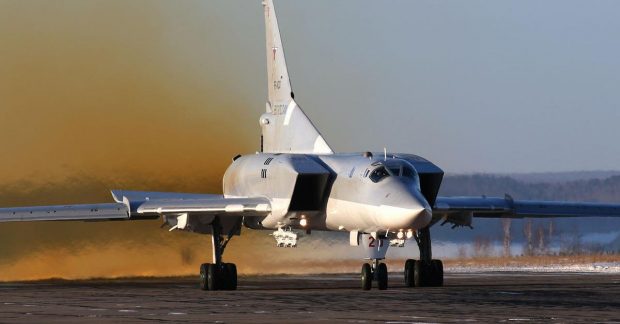
Russian military aviation depletes its resource due to the loss of manufacturing technologies
Experts emphasize that Russia's defense industry is unable to restart serial production of strategic bombers and critical engines, relying solely on Soviet stockpiles.
 🚌Transport
Photo: UNIAN
Key points
- Loss of Soviet manufacturing and technological cycles in Russia
- Critical shortages of NK-12MP and NK-25 aircraft engines
- Heavy reliance on legacy stockpiles and aircraft cannibalization
- Operational limits on missile strikes due to fleet exhaustion
Modern Russian military aviation is facing a deep systemic crisis caused by the loss of key technological cycles and production chains. According to defense industry expert Anatolii Khrapchynskyi, the Soviet strategic aviation potential was built on the cooperation of enterprises across the entire former empire, utilizing unique metallurgy and machine tools that have now been lost.
Engine Shortages and Maintenance Challenges
The main obstacle to restoring the heavy aircraft fleet is the lack of capability to manufacture complex assemblies serially. Specifically, strategic bombers like the Tu-95MS critically lack new NK-12MP turboprop engines, while Tu-22M3 bombers suffer from a shortage of NK-25 engines. The Russian defense industry is forced to rely on warehouse reserves and the "cannibalization" of older airframes, rapidly exhausting their remaining flight hours.
The situation is further complicated by damage to repair infrastructure, notably at facilities in Taganrog, which disrupted logistical recovery chains. Furthermore, Western sanctions have blocked modern airborne warning and control system projects like the A-100, leaving Russia's limited radar aircraft fleet in a state of gradual degradation.
Limits of the Enemy Air Fleet
Airframe wear and a deficit of operational lifespan are particularly evident on missile carriers such as the MiG-31K and Tu-160M. Manufacturing complex structural elements is plagued by high defect rates and technological hurdles. Meanwhile, attack aircraft like the Su-25 are also losing relevance due to Ukraine's advanced air defense systems and the absence of facilities to build new jets from scratch.
Ultimately, the remaining number of operational strategic aircraft creates a hard ceiling that limits the scale of simultaneous missile salvos. Despite this, occupying forces continue to push these aging airframes to their absolute limits, pointing to a long-term but steady degradation of their aerial capabilities.
Source UNIAN — unian.ua/weapons/rosiya-maye-obmezheni-mozhlivosti-vidnovlyuvati-st… ↗
Read next
 🚨Events
Daytime strike on Kyiv: enemy drone hits residential high-rise building
On the afternoon of November 23, a Russian drone hit the roof of a residential building in Kyiv's Podilskyi district. Emergency services are working at the scene, and fir…
 💼Economy
Ukrainian Agricultural Sector Faces Bankruptcy Risks Amid Logistical Crisis and Infrastructure Attacks
Agricultural enterprises in Ukraine have depleted their financial reserves due to hostilities and grain export problems. The first farm bankruptcies could begin as early …
 🏛️Politics
SAP Prosecutor Praises NABU Video Editors Amid Criticism of Investigation Quality
Prosecutor Rostyslav Batig highlighted the professionalism of NABU's media team when questioned about the bureau's reliance on PR over legal evidence.
 ⚽Sport
Carlos Alcaraz Triumphs at ATP Finals: Season Review and Insights
Spanish tennis star Carlos Alcaraz completed the ATP Finals undefeated, cementing his dominant position in men's tennis.
 🩺Health
Scientists Reveal Two Age Milestones When Human Immunity Ages Most Rapidly
New research demonstrates that the human immune system does not age uniformly, experiencing two sharp declines around age 40 and after 60.
 🛡️Security
DTEK Energy Workers Set Annual Record for Restoring Power After Attacks
Between November 16 and 22, energy crews restored electricity for 3.5 million households across several Ukrainian regions, with the Odesa region accounting for the vast m…